What are treat values and why do they matter?
May 26, 2026When it comes to training our dogs, using food is an effective and efficient way to teach our dogs the skills they need and using the food to reward our dogs and drive their behavioral repertoire forward. Something that is often overlooked by new dog guardians is their dogs perceived value of the treat and when to use which value treat in their training plans. In addition to not understanding how to shift and adjust their dogs regular meal times and portions.
When I start working with a new client we always break down their dog's regular feeding schedule to make sure that we are setting the dog and guardian up for success. Do you know how much you feed your dog everyday? If the answer is no, that is your first step. Get clear about how much your dog is eating every day. Use the same measuring cup to ensure you know how much your dog is eating. This ensures that you are neither over feeding or under feeding your dog. Many dogs can handle getting extra calories from training treats, especially if they are young, growing and extremely active. Then there are other dogs that may already be close to over weight and adding more calories to their diet is not going to be healthy. So it's important to take a look at your dog's age, weight and exercise level to decide if you need to make adjustments to their daily portion of food. Also note that you do not have to feed your dog the exact same portion size each day. If your dog hasn’t been that active, feed them less, if they have been really active, feed them more. When it comes to training, especially in the early phases when your dog is going to be getting a lot of rewards in training you can measure out your dog's daily portion. Give them a small portion at breakfast and then use the rest of the kibble throughout the day for their training. Whatever is left over in the evening can be served as their dinner.
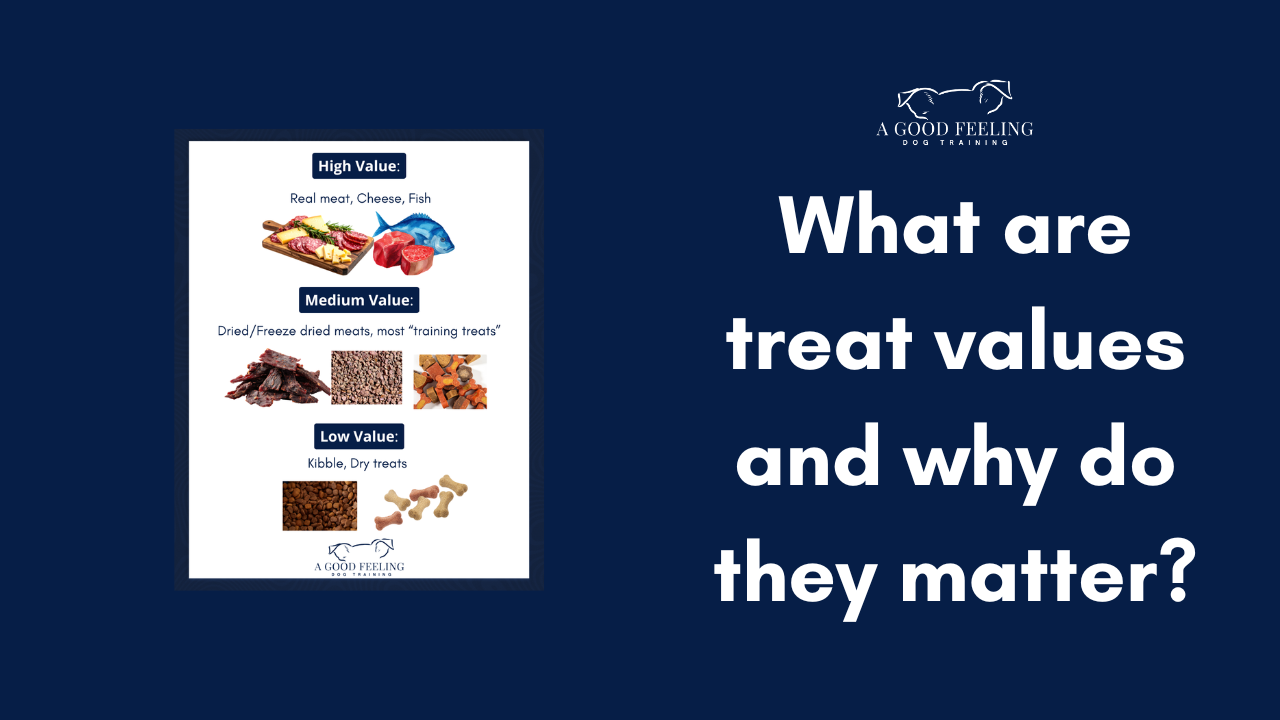
Which leads me to the value of treats. As a baseline I like for my clients to begin training their dog in their home by using their dogs normal food. Most guardians are feeding their dogs kibble, which lends itself well to use in training. Kibble is low value to most dogs because it is something they eat every day and have access to eat without having to work for it. I will say that I know a few select dogs that think that any food is high value. If this is your dog, I want to encourage you to use their kibble for the bulk of their training. If your dog is not even that excited about eating their kibble, you will likely have to use a high value treat. As a general rule this chart shows what most dogs consider to be low, medium and high value treats. There is always an exception to this, but to give you a visual.
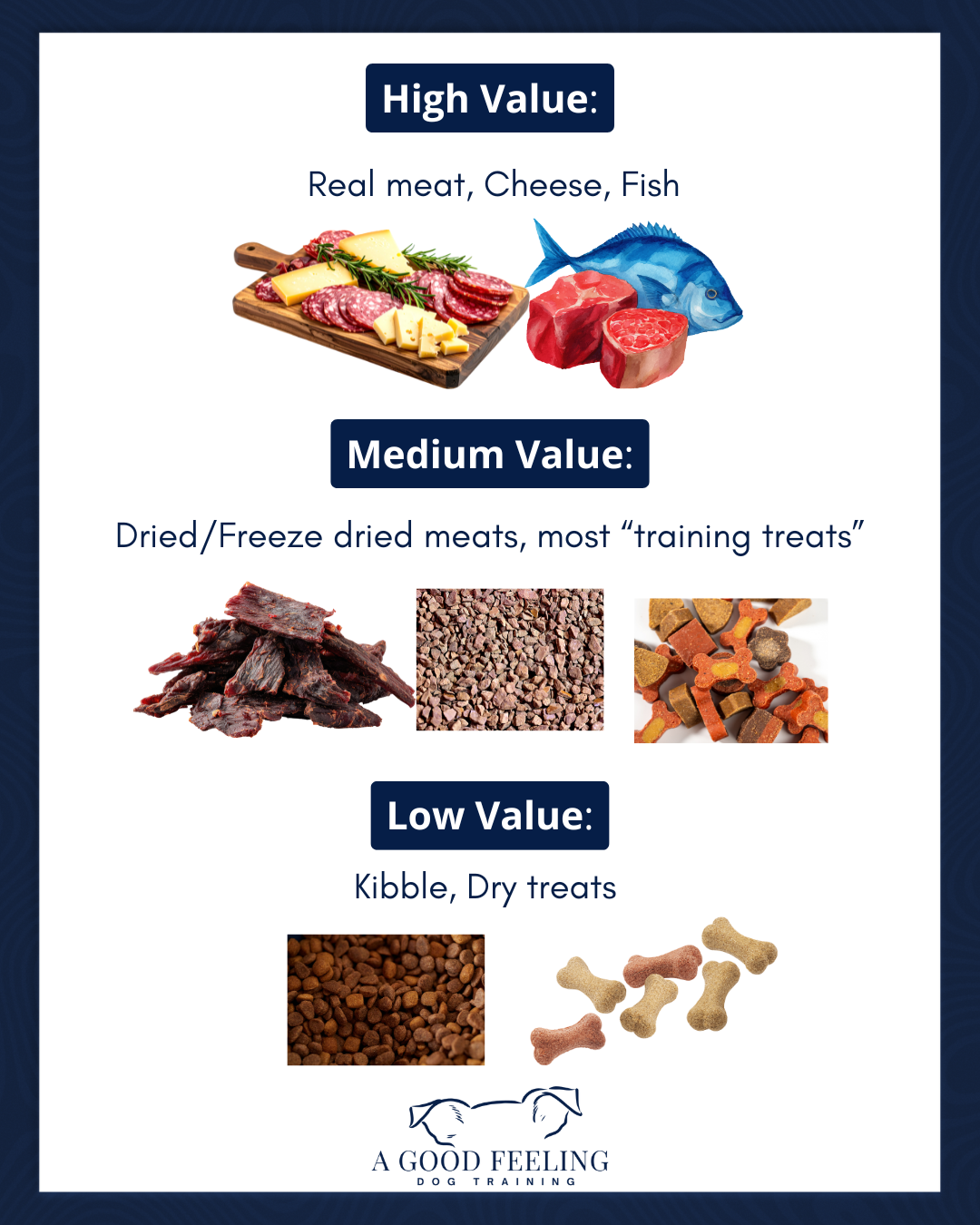
If you are still trying to figure out what your dog's treat hierarchy is, I suggest doing a taste test. Set several different types of treat values out on a plate and set it down. See which ones your dog eats first, those are likely high value to them. Then the one they leave for last our don’t eat, those are the low value ones. Again there are some dogs that will literally eat anything, those are the dogs that you can get away with using low value treats for the bulk of their training.
Once you know your dogs treat values then you can begin to leverage this information for the sake of training. There are certain behaviors that I personally always use high value treats for because of how valuable it is to me that my dogs respond to certain cues. An example of this is my dogs trained recall cue. When the skill was initially taught I used high value treats, once the recall was reliable I intermittently rewarded with high medium and low value. Now that the skills are trained and proofed I can use what value I happen to have in my treat pouch that day. Beyond a life saving skill like a recall I suggest that my clients look at the behaviors that they want their dog to perform the most but the dog is performing the least amount of. These are the behaviors that I would encourage my clients to use high value treats for. So really thinking about what is the hardest behavior for my dog to perform, that is the behavior I would reward with high value treats more frequently. Then what is a behavior that my dog can readily respond to almost always, that is a behavior that I would exclusively use low value treats for.
There is a lot more complexity to creating and executing training plans, but if you can leverage values of treats, it is sure to expedite your training and make it more rewarding for both you and your dog. The great news is that you can keep your dog at a healthy weight and use a lot of treats during the training process. My dogs get treats every day and also maintain a really healthy weight. In fact their veterinarian always comments on how trim and muscular my dogs are, which I of course take great pride in.
Happy Training
-Rachel
Join our email list to be the first to know when a new blog has been published!
We promise not to share your info or send spam emails!